An agribusiness pioneer
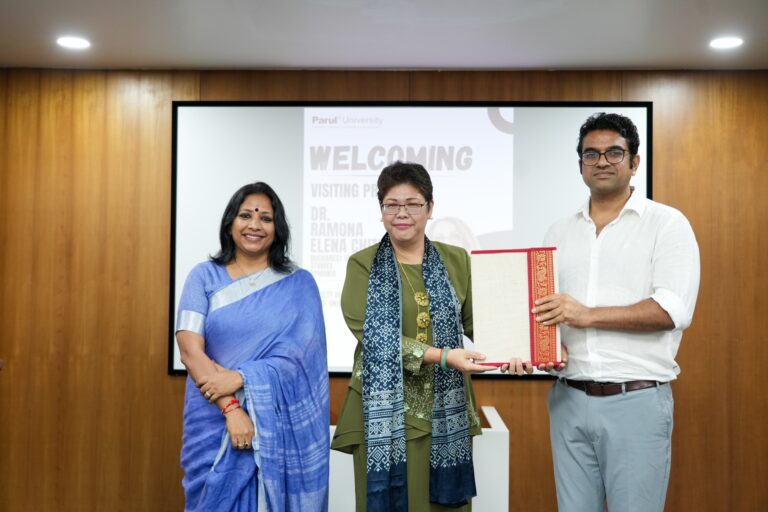
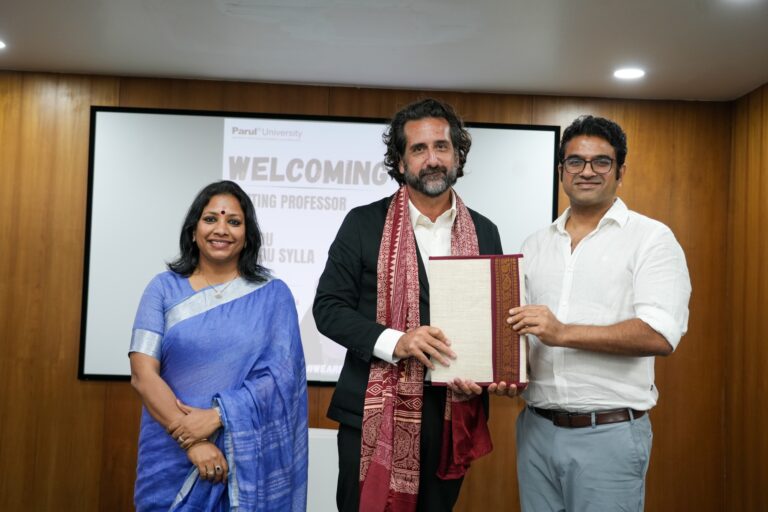
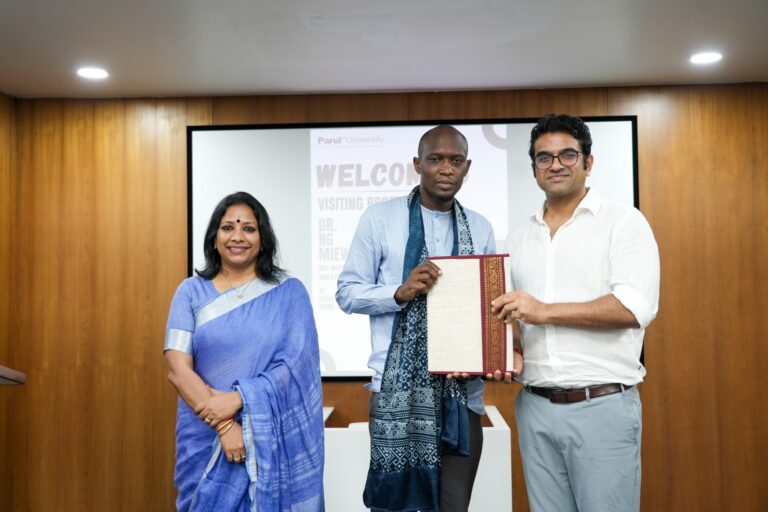
Prof. Dr. Nalini Arumugam is an Associate Professor and Senior Lecturer at Universiti Sultan Zainal Abidin in Malaysia, with 20 years at her present university, 28 years in academics, and a PhD in agribusiness marketing. She is the pioneer co-founder of her university’s agribusiness programme and a former deputy dean and programme coordinator. Her subjects, supply chain management, agribusiness policy and regulation, food marketing and entrepreneurship- follow food from the farm to the buyer. She describes herself as a social scientist working among scientists, which shaped a practical, application-first approach, and she taught at Parul University’s Faculty of Management Studies under the Centre for International Relations and Research (CIRR) Visiting Professor Program. She also has family roots in Tamil Nadu, with ancestry in Trichy and Madurai.
A fixed plan, taught paperless
Before arriving, Prof. Nalini had committed to eight topics of four hours each, 32 hours in total, and she followed the schedule as planned while sharing extra material beyond it. She ran the sessions paperless, using interactive tools: Wayground, where students scan a QR code to answer a question on screen, together with Padlet and Slido, so discussion is captured live for the whole class to see. Everything ran through the classroom screen and depended on internet access, which was her one real frustration during the stay, though the students enjoyed the format throughout.
Selling agriculture to Generation Z
Agribusiness was her favourite part of the programme, and her mission was to change how young people see agriculture. There is opportunity across the sector, she told students: a student need not be on the production side but can be an agro-entrepreneur, and innovations such as drones and IoT are giving the sector a new look. She wants agriculture to carry the same appeal as IT, pointing out that a population of nine billion has to eat, and she used Amul to show the scale an agribusiness can reach. Her message to business students was direct: do not close the door on agriculture, because food is something people will always need and every problem in the sector is a place where a business can begin.
Research on coconut, farmers and the national food monograph
Prof. Nalini grounded her teaching in her own research. As a principal investigator on several grants, she studied the value chain and supply chain of the coconut industry, asking how far IoT and big data reach Malaysian farmers, the answer being that they remain limited and costly, and how government subsidies affect farmer behaviour. Her big-data work produced four published papers with mixed results across industries such as oil palm and paddy. She has also written a national food consumption monograph covering more than 200 agro-food items, from fruit to the fish industry, whose finding that rice consumption is falling sat uncomfortably with a national policy of producing 65 percent of the country’s rice and importing 35 percent, a contradiction between research output and policy she argued needs to change.
Food security and a global classroom
She tied her subject to food security, contrasting Malaysia, which imports beef, onion, garlic and potato and holds only about a month of rice reserves, with India and China, which she described as largely food secure, noting that Vietnam holds reserves for two years. Prof. Nalini did not treat the visit as a one-off. She agreed an arrangement with Dr. Amrita Singh, principal of the Faculty of Management Studies, where you can do an MBA and held an online meeting with her faculty in Malaysia, and began a global classroom as the first concrete step, even starting her own online classes while still on campus, and lined up guest lecturers to teach individual topics in her courses. She called the opportunity a durian runtuh, a Malaysian expression for an unexpected windfall, said the global classroom will definitely happen, and added that she would recommend the programme to her colleagues.