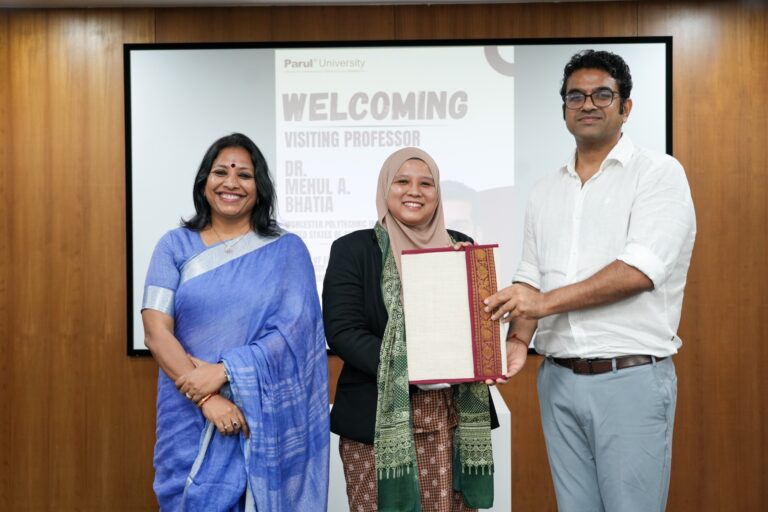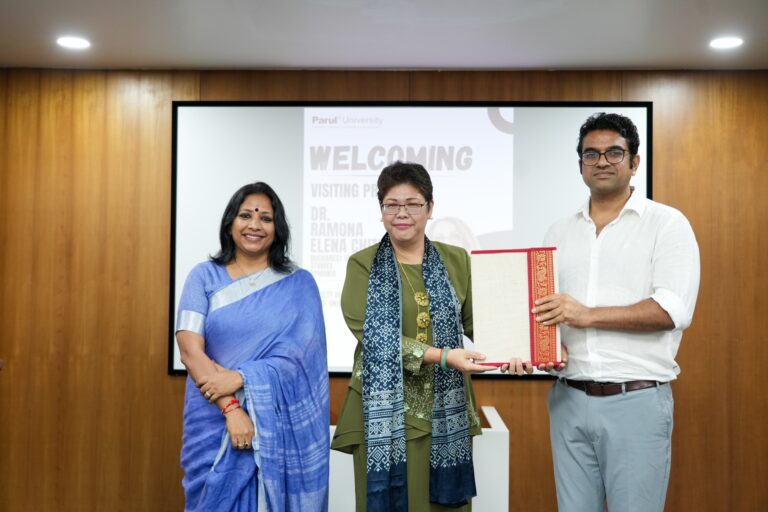
Dr. Musili Olubu Odutuyi at IVPP, Parul University!
A chemistry educator with a sustainability focus
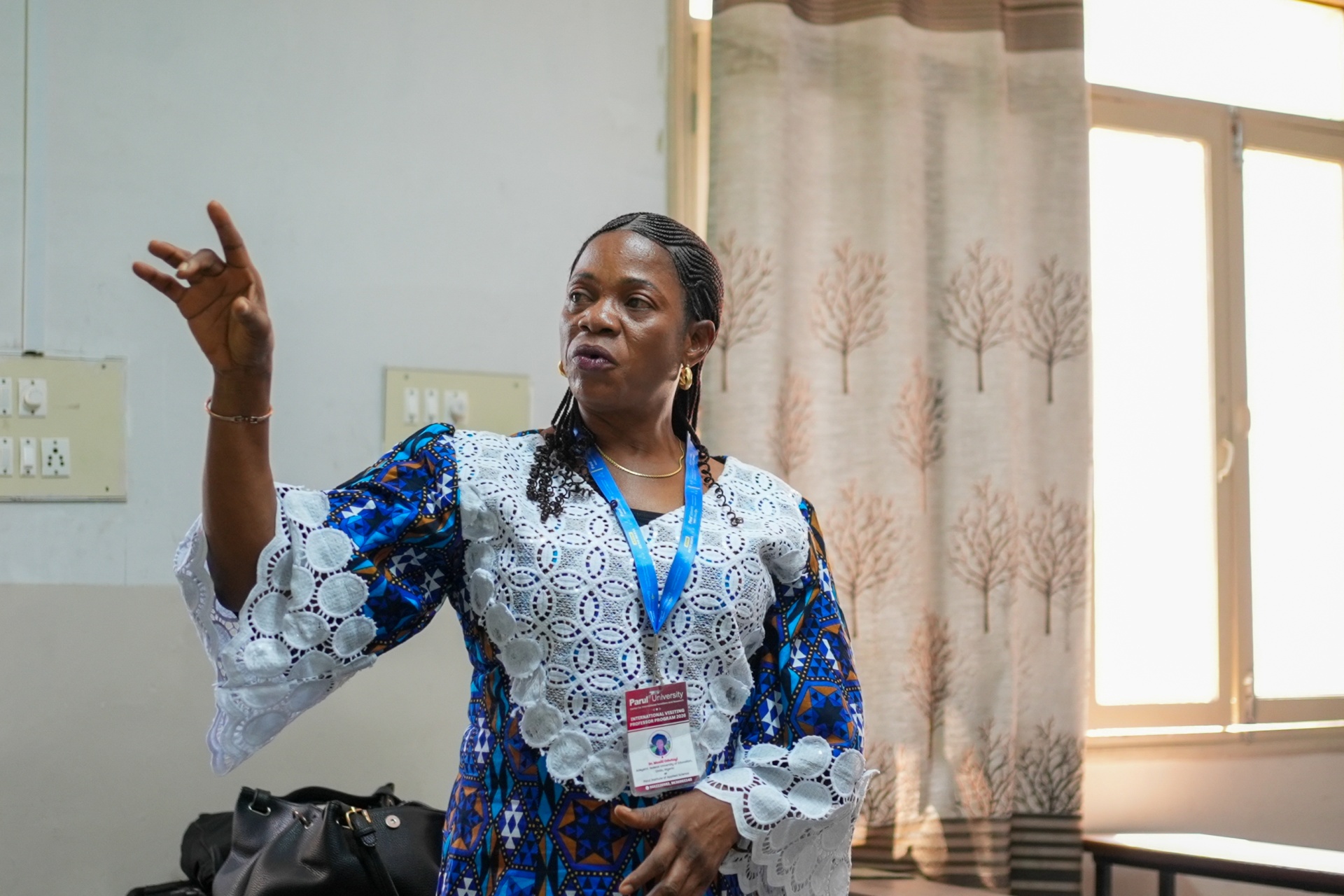
Dr. Musili Olubu Odutuyi is an associate professor in the Department of Science Education, Adeyemi Federal University of Education (AFUET), Ondo, Nigeria. She holds a Bachelor of Science in Chemistry Education, a Master’s degree in Science Education, and a Doctorate in Curriculum Studies and is a Postgraduate Diploma in Financial Management, Master of Business Administration, and a Diploma in Computer Studies holder. It was her teaching experience at Parul University (as part of the Centre for International Relations and Research (CIRR) Visiting Professor Program), which she appreciated as it provided her with exposure to the international world without having to travel abroad and helped in research collaboration between Parul University and other universities abroad. She was then given an assignment to teach chemistry at Parul Institute of Applied Science at Parul University with 32 hours of teaching in 2-hour teaching sessions. Her course focused on sustainability science principles, green chemistry, and sustainable development.
SDGs, Sustainability & Green Chemistry!
The essence of Dr. Odutuyi’s message was that chemistry students should have knowledge of sustainability. She taught the global agenda, the 17 United Nations Sustainable Development Goals, and a considerable portion of my class was spent on the various types of industrial pollution in India and how industries can reduce their pollution every day. She said when waste is generated, it contaminates the shared environment, and the “core principles of green chemistry” are about eliminating that contamination. The subject connected her discipline to a concrete political challenge: how to create less harm in industrial processes.
Spectroscopy as a second strand
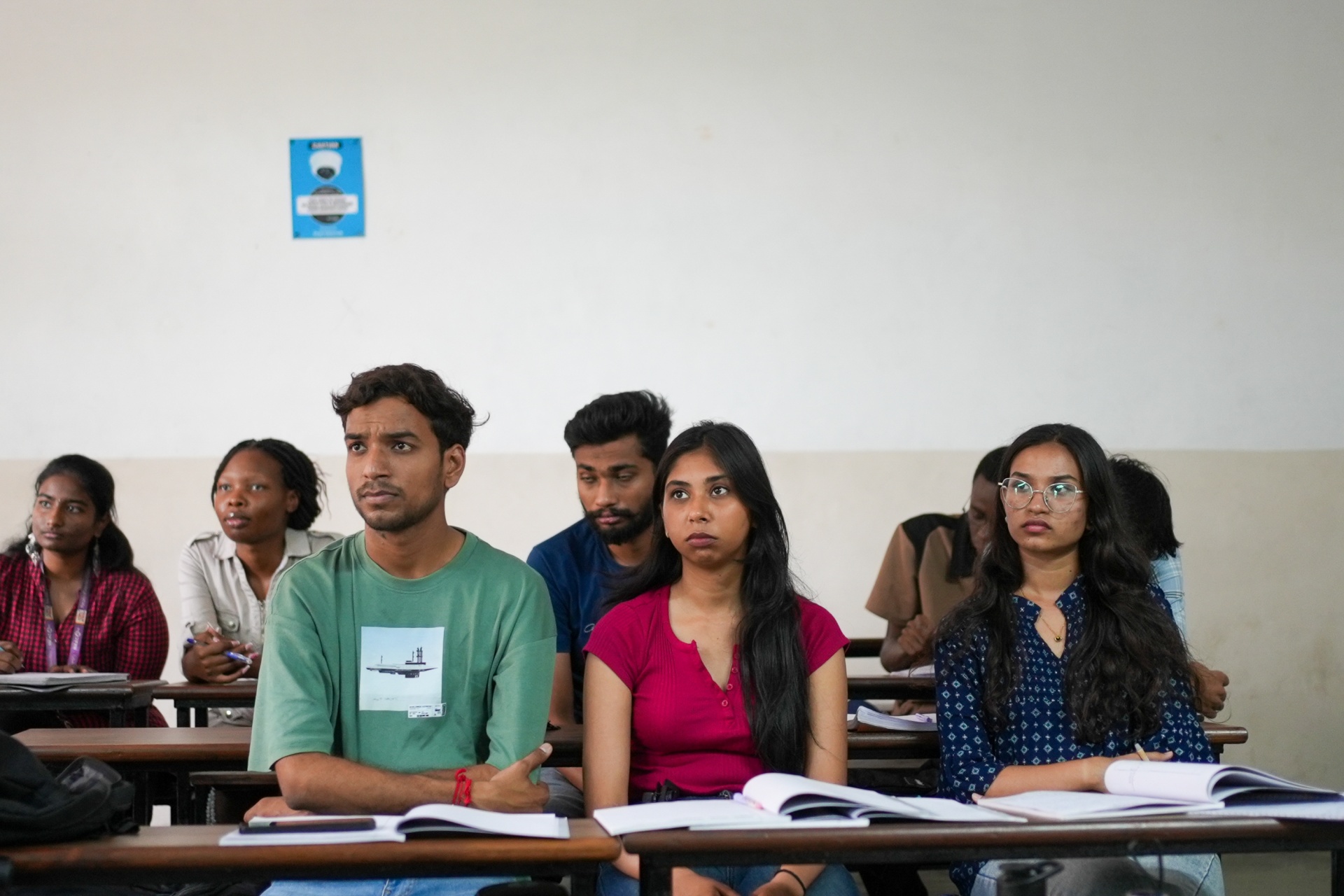
Alongside sustainability, Dr. Odutuyi taught spectroscopy. In her chemistry sessions, she covered nuclear magnetic resonance (NMR) spectroscopy, having students predict the number and nature of signals from a molecular structure, and teaching chemical shift, shielding and deshielding, electronegativity, coupling patterns, and J-values. She paired this with infrared (IR) spectroscopy, using characteristic absorption bands, for example, the stretching bands of NH and NH₂ groups, to identify functional groups, and showed how NMR and IR complement one another: NMR reports on atomic environments and connectivity, while IR identifies functional groups through their vibrational absorptions. Together, the two techniques let students read molecular structure from spectra and confirm that a chemical transformation has taken place.
India, and a message to students
Comparing her home university in Nigeria with Parul University, Dr. Odutuyi found the teaching methods broadly similar, both emphasising practical laboratory work alongside classroom theory, with the clearest difference being Parul University’s practice of bringing in professors from around the world. Her advice to students was direct: with strong facilities, equipment, and experienced faculty available to them, they should stay focused and determined and make the most of the opportunity. Asked to sum up Parul University in a single word, she chose excellent; for India, she chose kind.
Research facilities and a cross-department collaboration
She was impressed by the research ecosystem and facilities at Parul University as she visited MNRDC (Micro Nano Research and Development Center) and the PIERC. From well-established laboratories to next-gen machinery, she saw how Parul University is committed to providing industry-forward education to the students so that when they graduate, they have practical skills that work in today’s times. Her teaching drew students from beyond her own classes: a student coordinator from the Environmental Science department attended her chemistry lectures consistently, which led to an invitation to address that department’s students and staff about future research collaborations, a concrete example of how a visiting professor’s presence can open cross-disciplinary research links. She worked closely with her head of department, Dr. Ghanshyam Patel, and coordinator, Dr. Pooja Soni.