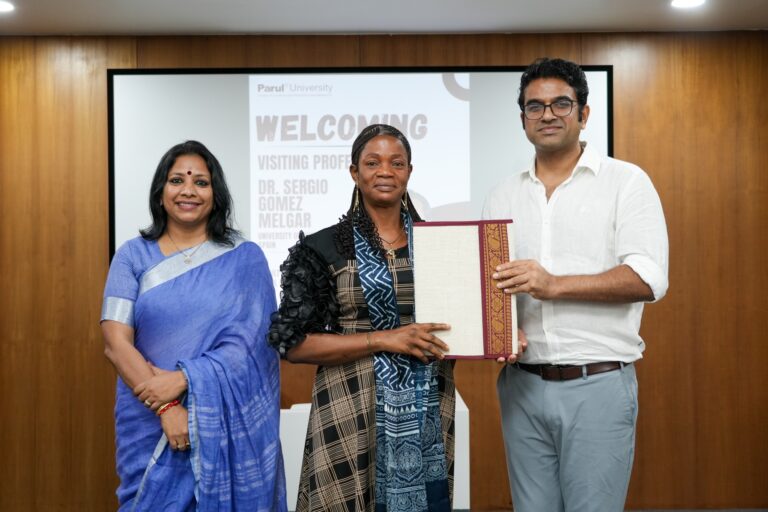
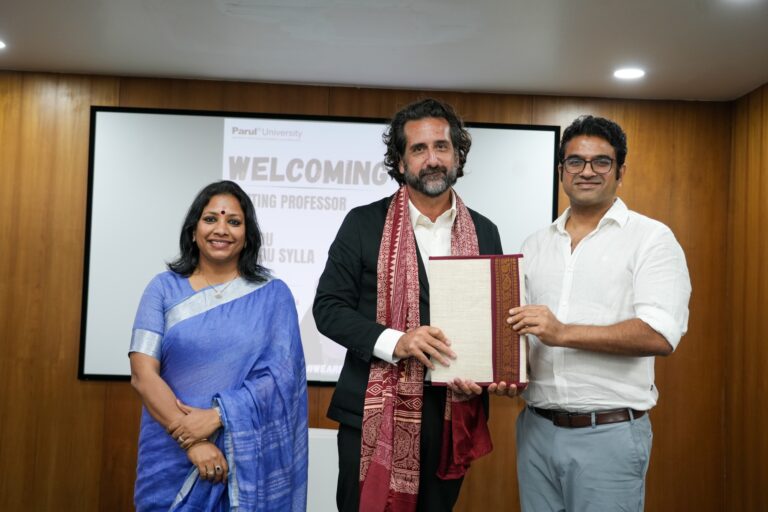
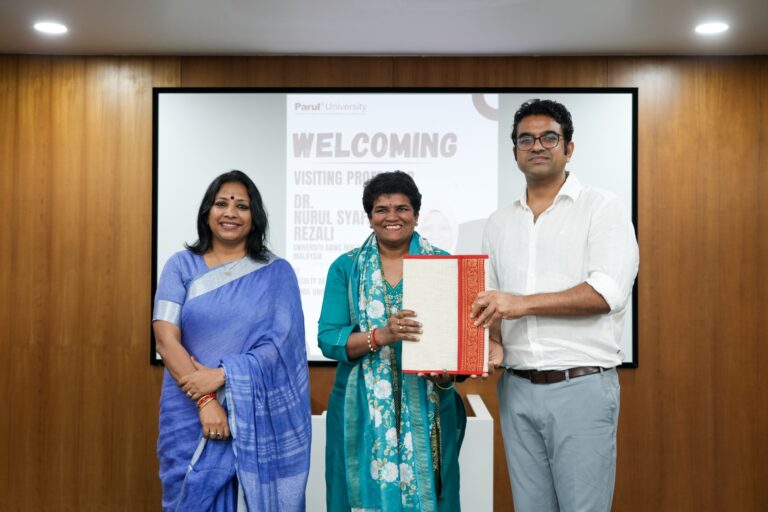
Dr. Shenai Facto Juance at IVPP 2026, Parul University!
A licensed criminologist and academic leader
Dr. Shenai Facto Juance is a licensed criminologist from Romblon State University in the Philippines, specialising in criminology and criminal justice, with about ten years of teaching and academic leadership. She became a criminologist in 2016. She placed fifth nationwide among 34,000 candidates in the Philippine Criminologist Licensure Examination. She got a score of 89.70 percent. That was her mark in criminal law. She has worked as a program chairperson. She has also worked as a dean. She is now dean of Instruction. She is also the campus dean of instruction for the College of Public Affairs and Governance. She taught at Parul University’s Faculty of Law under the Centre for International Relations and Research (CIRR) Visiting Professor Program and warmed the classroom by using Gujarati phrases with her students.
Victims beyond stereotypes
Dr. Juance opened her victimology lectures by insisting that the circumstances of a victim be examined without letting stereotypes decide a case. A victim’s conduct may have legal relevance to questions such as credibility or consent, she explained, but assumptions about how a victim should have behaved cannot replace the facts. Using the example of a woman walking home late at night and of sexual offences, she pressed students to separate circumstances that can properly be examined in a legal inquiry from stereotypes that have no place in determining consent. She also drew careful distinctions between a victim, a complainant, a witness, and a private offended party, roles that can overlap in a single case but remain distinct in legal procedure.
The three levels of victimisation!
A central part of the course was the idea that harm does not end with the original offence. Dr. Juance set out primary victimisation, the direct physical, psychological, sexual, economic, or social harm of an offence, using the case of George Floyd. She then explained secondary victimisation, the further harm a victim can suffer from the response of police, prosecutors, courts, media, or community, illustrated by a scam victim left without updates for months, and re-victimisation, renewed harm when protection mechanisms fail. She connected this to child witnesses, who follow special procedures in the Philippines, and to media trials, asking students a question she returned to throughout: does the justice response reduce a victim’s harm or add another layer of it?
Routine Activity. Risk without blame!
After the break, Dr. Juance explained the routine activity theory. Routine Activity Theory says that crime happens when a motivated offender, a target, and no capable guardian come together. Dr. Juance asked the class directly, “What makes you a suitable target?” She used their answers and the example of a phone left on a table at a restaurant to show how everyday habits can expose us to risk. She also said that security, good lighting, supervision, digital controls, workplace rules, and protection orders can all reduce the chances of victimisation. She showed that victimology can look at the facts without blaming the victim.
Philippine law and victim protection!
Dr. Juance tied Routine Activity Theory to law. She talked about Republic Act No. 9262, the Anti-Violence Against Women and Their Children Act of 2004 and its protection orders—Barangay, Temporary, and Permanent. She showed how these orders are an example of victimology used to stop more harm from happening. She also explained Battered Woman Syndrome and the cycle of abuse using the landmark case People v. Genosa. She traced how rape law changed with Republic Act No. 8353, which made rape a crime against a person and with Republic Act No. 11648. She explained why male victims may hesitate to report and covered trafficking and victim vulnerability under Republic Act No. 9208. As amended by the Expanded Anti‑Trafficking in Persons Act (Republic Act No. 11862). She emphasised that trafficking victims should not be blamed for choices made while being deceived. Throughout the talk, Dr. Juance urged students to shift from asking what crime was committed to asking what can be done to stop harm. She also shared her leadership rule: always choose to be kind. She said being kind means telling the truth about what’s truly good for a person even when that truth requires a difficult conversation.