A second-year student already building industry exposure
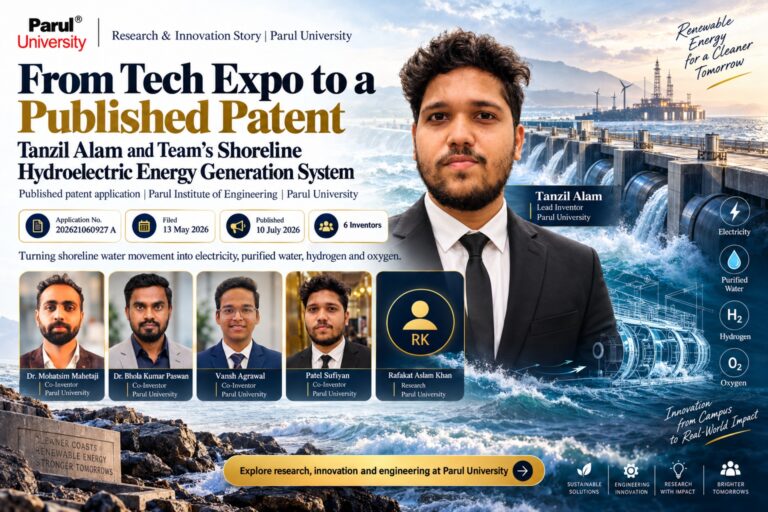
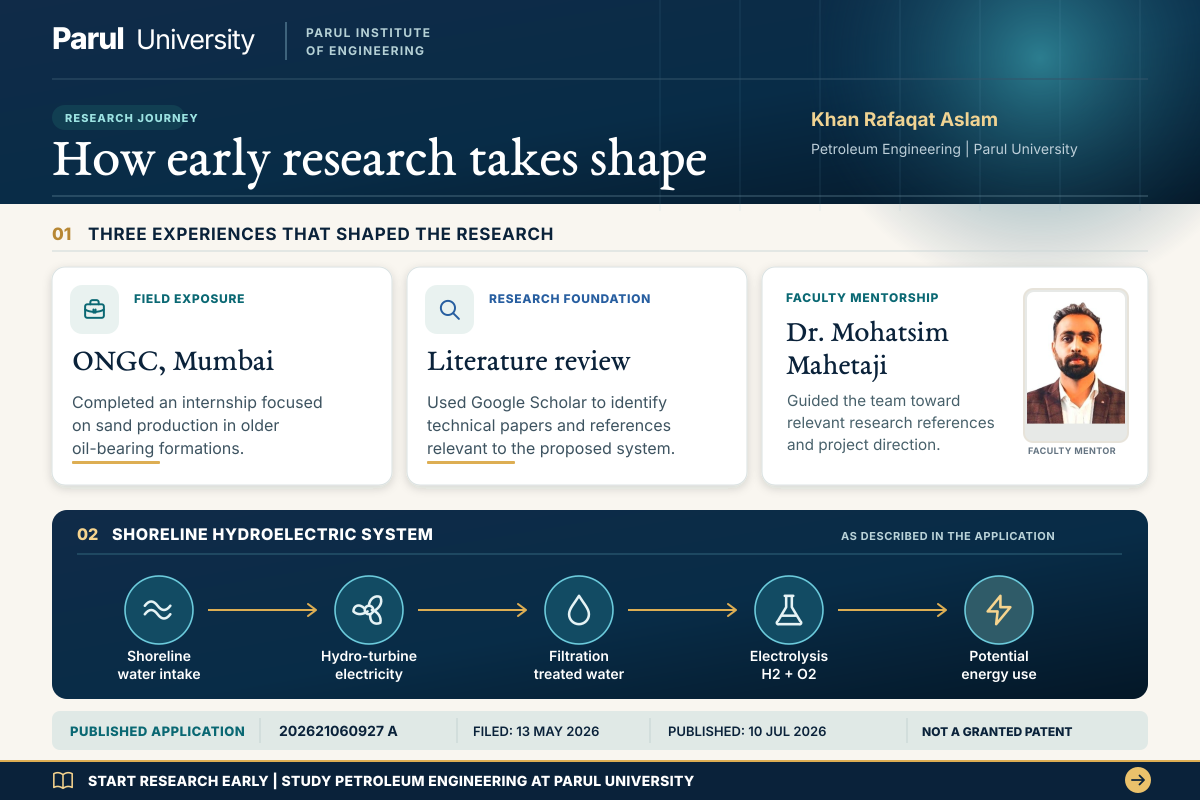
Khan Rafaqat Aslam, from Mumbai, is a second-year B.Tech Petroleum Engineering student (batch 2024 to 2028) at the Parul Institute of Engineering, Parul University. His industry exposure has started early: he completed an internship at ONGC in Mumbai, where he worked on sand production, a problem in old oil-bearing formations, wrote a research paper on it, and said the project won at the ONGC level. He is also doing an online internship with a United States based company he named as Pio Petro, and he maintains a large following on Instagram, where he stays in touch with people from the oil and gas industry. On the patent team he is a named inventor who handled the research.
Leading the research behind the patent
The patent project was Rafaqat’s first experience of research, an interest sparked by the team’s mentor, Dr. Mohatsim Mahetaji. He used Google Scholar to find papers and said the first skill he built was talking regularly with the mentor, which helped him locate the exact references that mattered for the model. He described the research as the most knowledgeable work he has done, and reflected that a patent application in the second year is a significant achievement, noting that some people finish a master’s degree without one. He values the project because it aims to cut carbon emissions and move from conventional to renewable energy. The full technical description of the system is in the project’s hub article.
How the team positioned its work
In Rafaqat’s account, the team’s distinguishing idea was to power an offshore rig directly with hydrogen the system produces, rather than only producing hydrogen for sale. He described this as the point of difference from comparable work elsewhere, pointing to projects in China and a paper from PDEU that, as he characterised it, produce offshore hydrogen but do not run the rig on it, and he described the team’s model as a first-of-its-kind attempt in India. He saw Mumbai High, a major source of India’s offshore hydrocarbons, as a first potential site. These are his characterisations, offered as the team’s view rather than established fact.
What comes next, and advice for students
Rafaqat said the team’s next target is another Tech Expo after the patent filing, with a path to higher levels of competition as the students move into their third year, and he named an ONGC conference and an international conference as venues where the team hopes to present the model. His advice to students who have ideas but never act on them is twofold: go and learn what is not already in your mind, and take your idea to a mentor, because a mentor gives both knowledge and confidence.