From petroleum engineering toward renewable energy
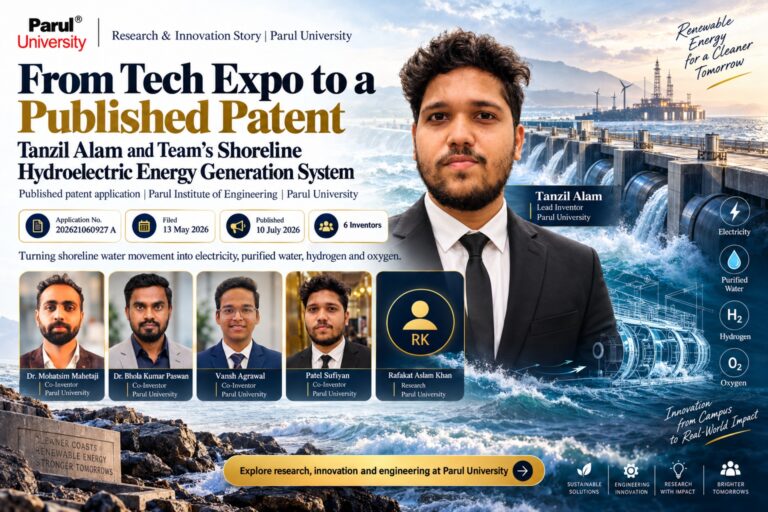
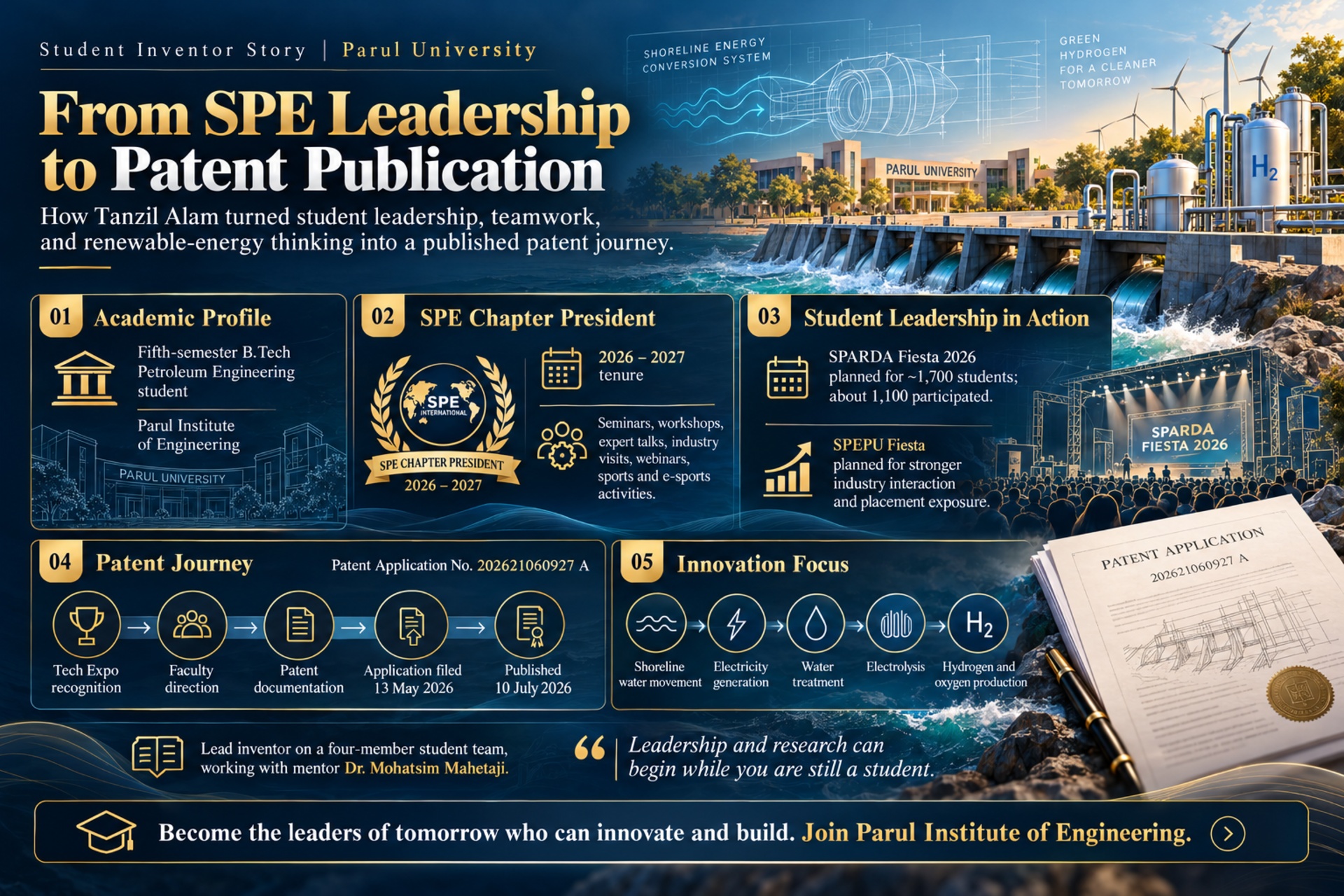
Tanzil Alam, originally from Kolkata, is a fifth-semester B.Tech student in Petroleum Engineering at the Parul Institute of Engineering, Parul University. Although his discipline is petroleum engineering, his interest has grown toward renewable energy, and his work on the Shoreline Hydroelectric Energy Generation System reflects an effort to connect renewable sources with existing energy and industrial applications. He is the lead inventor named on the project’s published patent application, Patent Application No. 202621060927 A, which was filed on 13 May 2026 and published on 10 July 2026 and remains at the publication stage.
Leading the Society of Petroleum Engineers student chapter
Tanzil serves as President of the Society of Petroleum Engineers (SPE) student chapter at Parul University for the 2026 to 2027 tenure. The chapter runs a wide range of activities for students, including seminars, workshops, expert talks, interviews, industry visits, webinars and sports and e-sports events, and he describes his role as coordinating these and creating academic, professional and industry-oriented opportunities for students in the Petroleum Engineering branch.
One of the chapter’s major activities under his leadership was SPARDA Fiesta 2026, a large student-engagement event planned for around 1,700 students, of whom about 1,100 took part on the day. The chapter was also preparing SPEPU Fiesta, planned for later in the year, to give students greater interaction with industry representatives and placement-related opportunities, with several industrial delegates expected to attend.
Leading the team from idea to patent
On the Shoreline Hydroelectric Energy Generation System, Tanzil led a four-member student team and developed the project together with the faculty mentor, Dr. Mohatsim Mahetaji, who helped the team find a direction with practical relevance. After the team presented its working model at the university’s Tech Expo and earned recognition, the mentors encouraged it to pursue a patent, and Tanzil carried out the patent work, with support from the university, preparing the documentation and seeing the application through to publication. The full technical description of the system is covered in the project’s hub article.
For Tanzil, the project offered learning beyond the classroom: treating energy generation, water treatment, electrolysis and hydrogen production as interconnected parts of one system, and moving an idea through teamwork and faculty feedback toward formal intellectual-property protection. He has expressed a clear interest in continuing to explore renewable energy, with the shoreline hydroelectric work as a foundation.