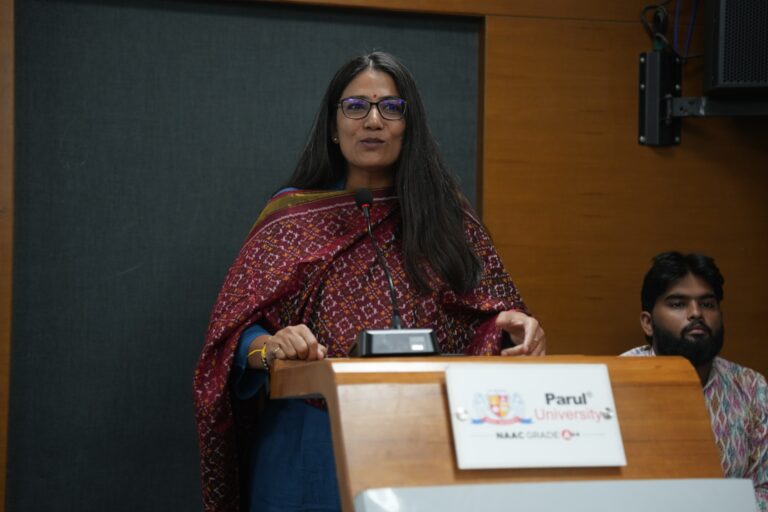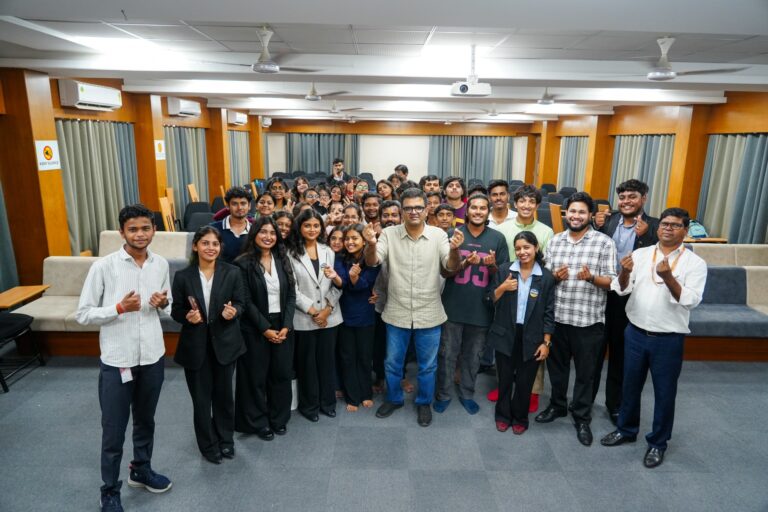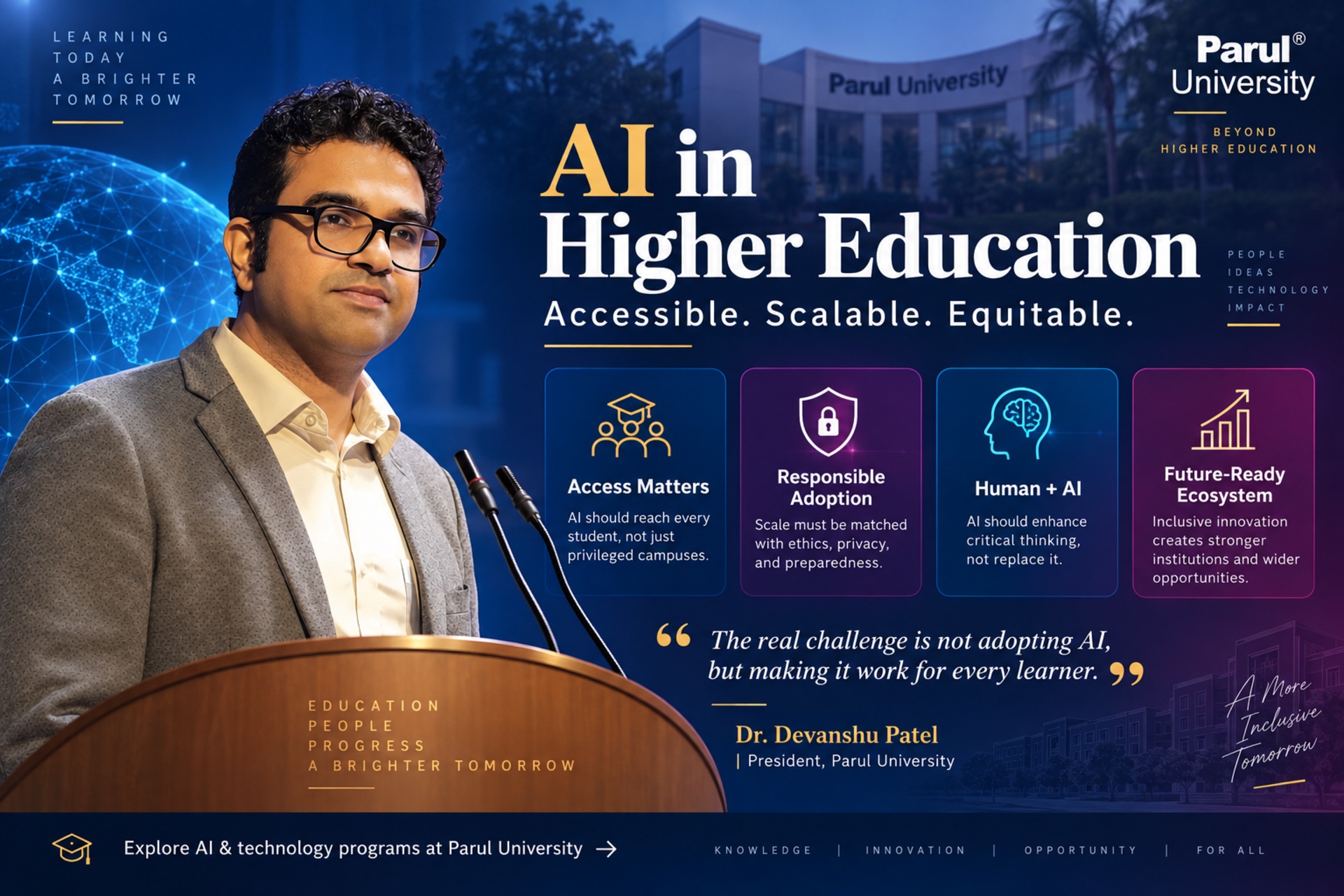
It’s super easy for any university to adopt the latest AI tools and technologies. But it’s far more important to acknowledge the fact that AI benefits must reach every student, even in the remotest place of this country. This was the central theme of the QS I-GAUGE National Summit on AI in Indian Education in Gandhinagar. Among the top dignitaries, the President of Parul University, Dr. Devanshu Patel, addressed the students regarding how this challenge is worth sitting with!
Adoption Is One Step; Access Is the Larger Conversation
As Dr. Devanshu Patel has expressed it, bringing AI into higher education is only the first step; making it accessible, scalable, and meaningful is the larger conversation. It is a distinction that reframes the entire debate. The question is not simply whether an institution uses AI, but whether AI genuinely reaches and benefits learners at scale and whether access is shaped by real educational need rather than by an institution’s wealth or location.
The Equity Challenge
The core risk in any technology shift is the gaps. If AI access is limited by institutional, economic or geographic barriers, it can deepen inequality in the educational sector. By sharing easy access to AI, it means that a student at any rural institution can enable opportunities at large with any well-funded university as well. With equitable access, it’s not a secondary concern, and that’s the whole point!
Scalable and Responsible Adoption
Reaching every learner requires two things at once: scale and responsibility. Scalable adoption means finding models that work across many institutions and contexts, not just pilot projects at flagship campuses. Responsible adoption means addressing the real challenges that come with AI, governance, academic integrity, data privacy, student safety, and educator preparedness so that adoption is inclusive and sustainable rather than rushed. The summit’s own theme, advancing responsible AI for access, equity, and excellence, captured this balance precisely.
AI Should Enhance Human Intelligence, Not Replace It
A theme that ran through the discussion, and through Parul University’s wider position, is that AI should enhance human intelligence, critical thinking, and creativity, rather than replace them. Technology is most valuable in education when it amplifies what teachers and students can do, freeing time for mentorship, deeper thinking, and human connection, not when it substitutes for them. This is the same principle that applies across fields where AI serves best as a powerful tool directed by capable human judgement.
Building an Education Ecosystem That Is Ready for AI
The larger ambition is an Indian higher-education ecosystem that is AI-ready, inclusive, and future-focused, one where emerging technologies translate into genuine opportunities for learners and institutions alike. That requires institutional preparedness, thoughtful policy, and a shared commitment across the sector to leave no learner behind.
Parul University’s participation in this national dialogue, alongside leaders from across Indian higher education, reflects a belief that the measure of AI in education is not how advanced it is but how many lives it meaningfully improves.
Be part of an inclusive and technology-driven future with Parul University’s B.Tech in Artificial Intelligence, B.Tech CSE in Artificial Intelligence and Machine Learning, B.Tech in Artificial Intelligence and Data Science, B.Tech in Quantum Computing and AI, and BCA in Artificial Intelligence and Technology