We humans can understand a photo in the blink of an eye. But for a computer, an image is just a grid of numbers,backed by artificial intelligence. From driving self-driving cars to medical diagnosis, here’s how machines learn to see and analyse.
The Intricacies of Computer Vision!
Computer vision is the only branch of AI that allows machines to learn and interpret information such as images and videos, the way we humans can do with our eyes. It’s one of the primary components of AI, as it sits in sync with machine learning and natural language processing. Computer vision allows a machine to identify roads, streets, traffic signs, people, and everything else. From facial recognition to autonomous driving, everything is possible when we teach a computer how to extract information from pixels.
The Core Tasks of Computer Vision
Computer vision isn’t a single technique, but it answers different questions about any visual-driven information!
- Image – What is this image all about? For example: car, dog, cat!
- Object – How many objects are present, and their location?
- Image segmentation – It divides an image into sets such as roads, vehicles, people, traffic signs, and buildings to finalise clear decisions.
- Processing & facial recognition – More focused on analysing, enhancing, and identifying and uses face recognition, fingerprints, and satellite images.
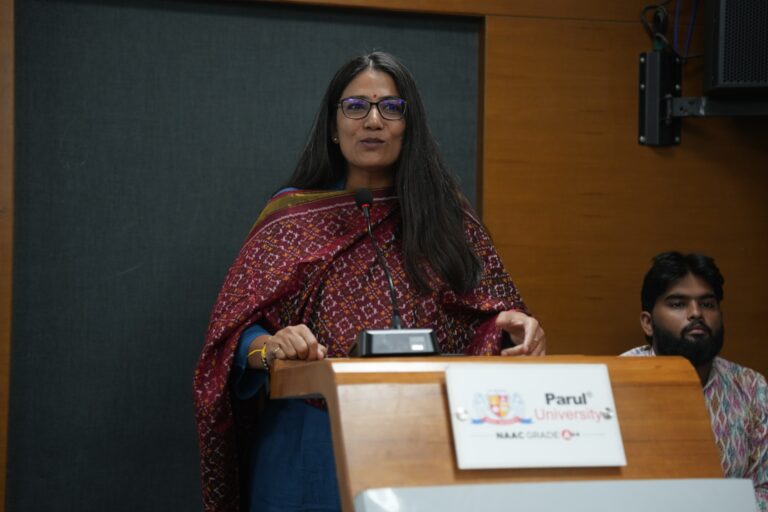
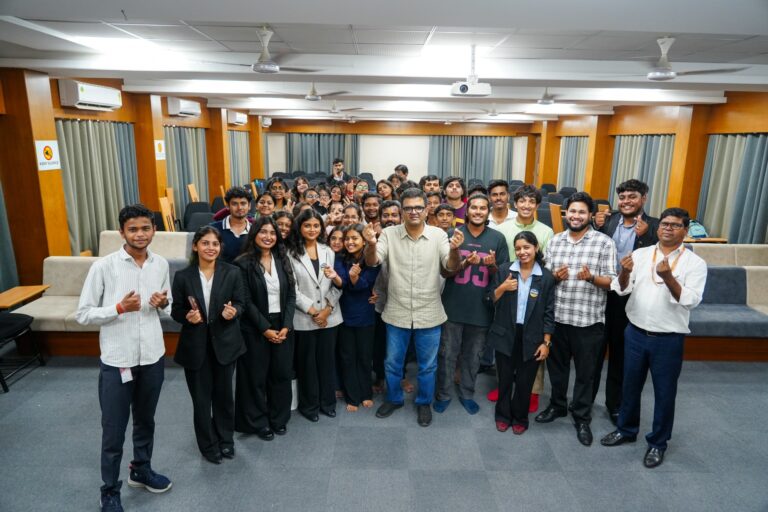
Image segmentation & processing were centrally discussed at Parul University’s hosted AI training, as they show computer vision in real action. It allows the whole scene to be understood, while processing allows a hospital to analyse an X-ray or MRI.
How Does Computer Vision Work?
Computer vision learns the way much of modern AI does: from data. A model is shown large numbers of labelled images, thousands of pictures tagged “car” or “pedestrian,” and gradually learns the visual patterns that define each one. Most advanced computer vision today relies on deep learning, using neural networks with many layers to recognise increasingly complex features, from simple edges up to whole objects. Because processing millions of images is enormously demanding, computer vision depends on powerful GPUs, which is exactly why Parul University’s AIML students train computer-vision models on the GPU-powered NVIDIA lab at Lakshya 2047.
The Usage of Computer Vision!
Computer vision is already woven into daily life and industry:
- Transport: Self-driving cars use segmentation to understand the road in real time.
- Healthcare: AI analyses X-rays and MRIs to help detect disease more accurately.
- Security: Face and fingerprint recognition for authentication and safety.
- Agriculture: Monitoring crops and detecting plant disease from images.
- Retail and manufacturing: Checkout-free stores and spotting defects on a production line.
Inspired already? Prepare for the next era of technology with Parul University’s B.Tech CSE in Artificial Intelligence and Machine Learning, B.Tech in Artificial Intelligence (ML & Robotics), M.Sc. IT in Artificial Intelligence, and MBA in Artificial Intelligence and Technology Management.